
In this perspective
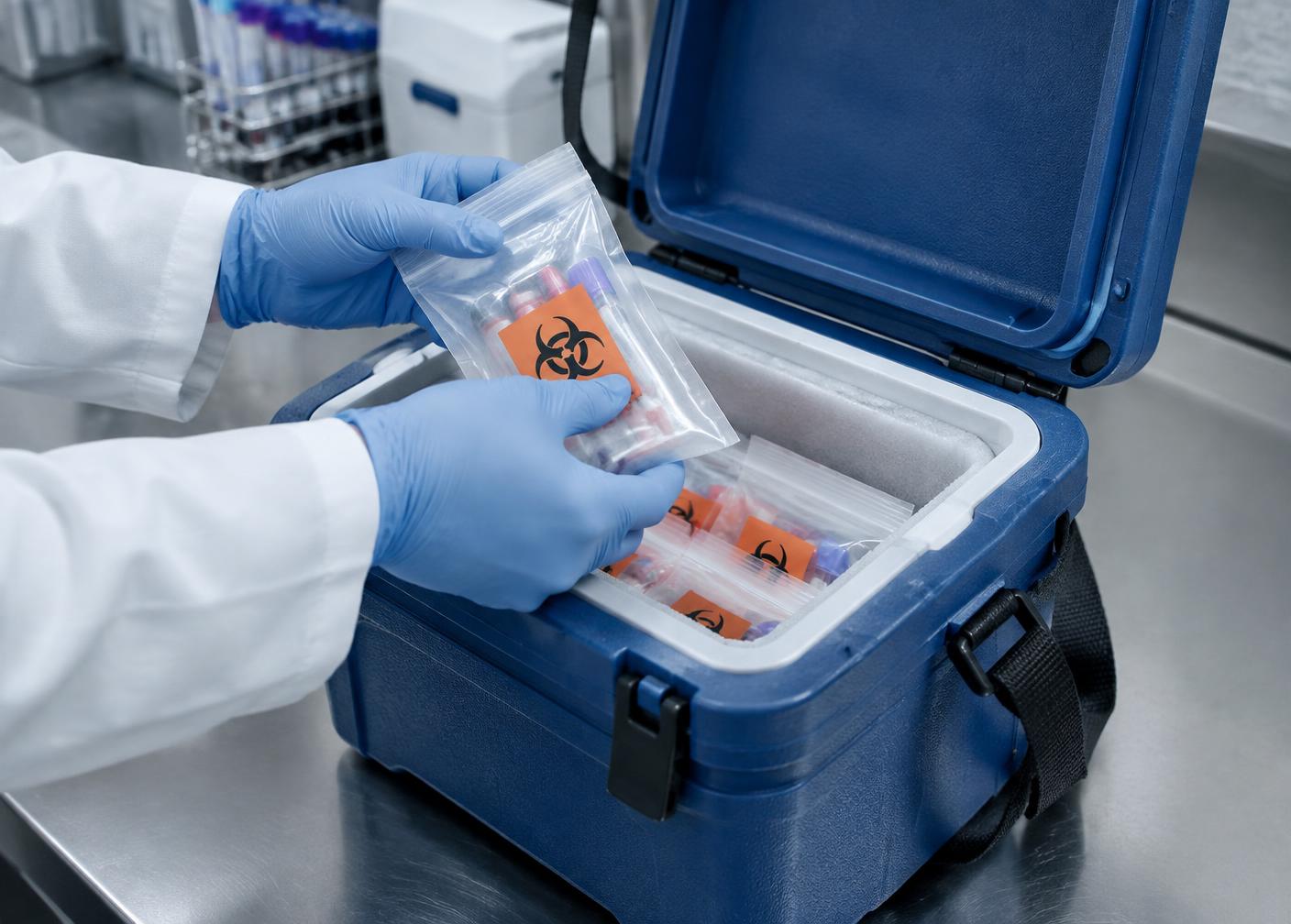
A specimen journey is more than a trip between addresses. It is a sequence of responsibilities: someone prepares a collection, someone releases it, someone transports it, and someone receives it. Chain-of-custody records help connect those responsibilities so an organization can understand who held an item, when it changed hands, and what exceptions occurred along the way.
Start with the right identification
Reliable transportation begins before a courier arrives. The collecting organization should follow its approved procedures for specimen labeling, order reconciliation, packaging, and release. A transport reference should connect the shipment to the appropriate operational record without broadcasting patient details to people who do not need them. A barcode can simplify this connection, but only if the identifier is correctly assigned and consistently used.
Distinguish the specimen identifier from the package, bag, or carrier identifier. One carrier may contain multiple individually identified specimens, and those relationships need to remain understandable at receipt. Transport personnel should not improvise labeling corrections or resolve clinical identification discrepancies. When information is missing or inconsistent, the responsible collecting or receiving team should decide the next step under its procedures.
Define an authorized release
A scheduled pickup does not automatically establish that an item is ready or that anyone nearby may release it. Organizations should agree on authorized collection locations, release personnel, pickup windows, and the checks expected before custody transfers. The release record can capture the shipment reference, location, time, releasing person or approved identifier, and the transporter's acknowledgement.
For unattended collection points, define a specific access and release process rather than relying on informal habits. Clarify who confirms readiness, how access is controlled, and what happens if the expected package is absent. A courier finding a locked room should create a pickup exception, not record a completed collection. These distinctions make later reconciliation more useful than a single generic status.
Document each transfer, not just the endpoints
Custody may pass through a collection team, an initial courier, a transfer point, another courier, and a laboratory receiving team. Each planned transfer should have a defined record. At minimum, teams need to know which shipment changed hands, the transferring and receiving parties, the event time, and the location. Where procedures require seal or package checks, document their outcome rather than assuming it.
Consider a hypothetical clinic pickup followed by an evening transfer to a second courier. The second courier observes a damaged outer package. A useful record connects that observation to the transfer, identifies who was notified, and preserves the original pickup information. Quietly replacing packaging and continuing without an exception record may make the journey appear uncomplicated while hiding information the receiving laboratory needs.
Keep handling requirements separate from location
A custody record does not by itself establish that transport conditions were maintained. Packaging, temperature, time, orientation, and other handling requirements vary with the specimen, requested testing, receiving laboratory instructions, and applicable rules. Those requirements should be established by the responsible organization before transport and communicated to personnel in a usable form. A general courier workflow is not a substitute for specimen-specific instructions.
When monitoring is required, agree on equipment, recording intervals, acceptable evidence, and escalation responsibilities. A temperature reading at delivery may not describe the entire journey, and an insulated carrier alone does not demonstrate a validated process. Transport teams should report deviations using the approved procedure. The receiving laboratory or other designated authority determines acceptance, further assessment, or disposition; couriers should not make clinical judgments.
Close the journey with receiving confirmation
Vehicle arrival, physical handoff, laboratory receipt, and specimen acceptance are different events. Define which one the transport service records and which belongs to the laboratory. Receiving confirmation should connect to the same shipment reference used at pickup and identify the receiving location, event time, and authorized recipient or approved receiving process. If the laboratory later performs acceptance checks, do not automatically describe the handoff as clinical acceptance.
A hypothetical delivery illustrates the distinction: a courier reaches the building on time, but the usual receiving entrance is unavailable. Leaving the package elsewhere is not equivalent to completing the agreed handoff. The exception should remain open until an authorized receiving process is completed or the designated team directs another action. Accurate status language prevents a reassuring delivery label from concealing an unresolved responsibility.
Make exceptions useful for improvement
Exceptions should record what happened, when it was recognized, the shipment involved, who was contacted, and the action taken. Useful categories might include unavailable pickup, incomplete release information, package damage, route delay, or an unconfirmed recipient. Preserve the original event history when correcting a record. A later clarification should add context rather than erase the fact that a problem occurred.
Review custody records as a connected workflow, not merely as proof that a driver completed a route. Repeated access problems may indicate unclear collection instructions; recurring receipt discrepancies may require a shared receiving checklist. Agree on retention, access, and review responsibilities with the organizations involved. Formal evidentiary custody requirements can differ from routine operational tracking, so confirm the applicable standards rather than assuming one documentation model satisfies every purpose.
Key takeaways
- Connect specimen and shipment identifiers without unnecessarily exposing patient information.
- Define authorized release, every planned transfer, and receiving confirmation.
- Document handling evidence separately from location and custody events.
- Escalate exceptions and leave acceptance decisions to the responsible laboratory.
Educational operational guidance, not medical or legal advice. Examples are hypothetical. Requirements vary by specimen, role, organization, and applicable rules. VialRelay is an emerging business building connected healthcare operations; service scope remains subject to review.
Explore Healthcare LogisticsAll Insights