


VialRelay

Industries We Support

Supporting the Organizations Behind Patient Care.

From diagnostic laboratories and healthcare systems to clinical research and specialty care, VialRelay is building coordinated logistics, specialized workforce, and operations technology solutions around the distinct needs of healthcare organizations.

Laboratory professionals preparing sealed specimen containers at a receiving bench

Diagnostic laboratories

Built Around the Rhythm of Laboratory Operations.

Laboratory work depends on connected collection and receiving processes. Pickup windows, route schedules, documented handoffs, and workforce requirements need to be considered together.

Healthcare Logistics
Evaluate collection-site pickups and scheduled routes around specimen requirements and receiving cutoffs.
Specialized Workforce
Review laboratory operations, accessioning, collection, and courier staffing requirements and qualifications.
Operations Technology — Planned Capabilities
Planned pickup requests, dispatch coordination, and shipment documentation in one connected environment.
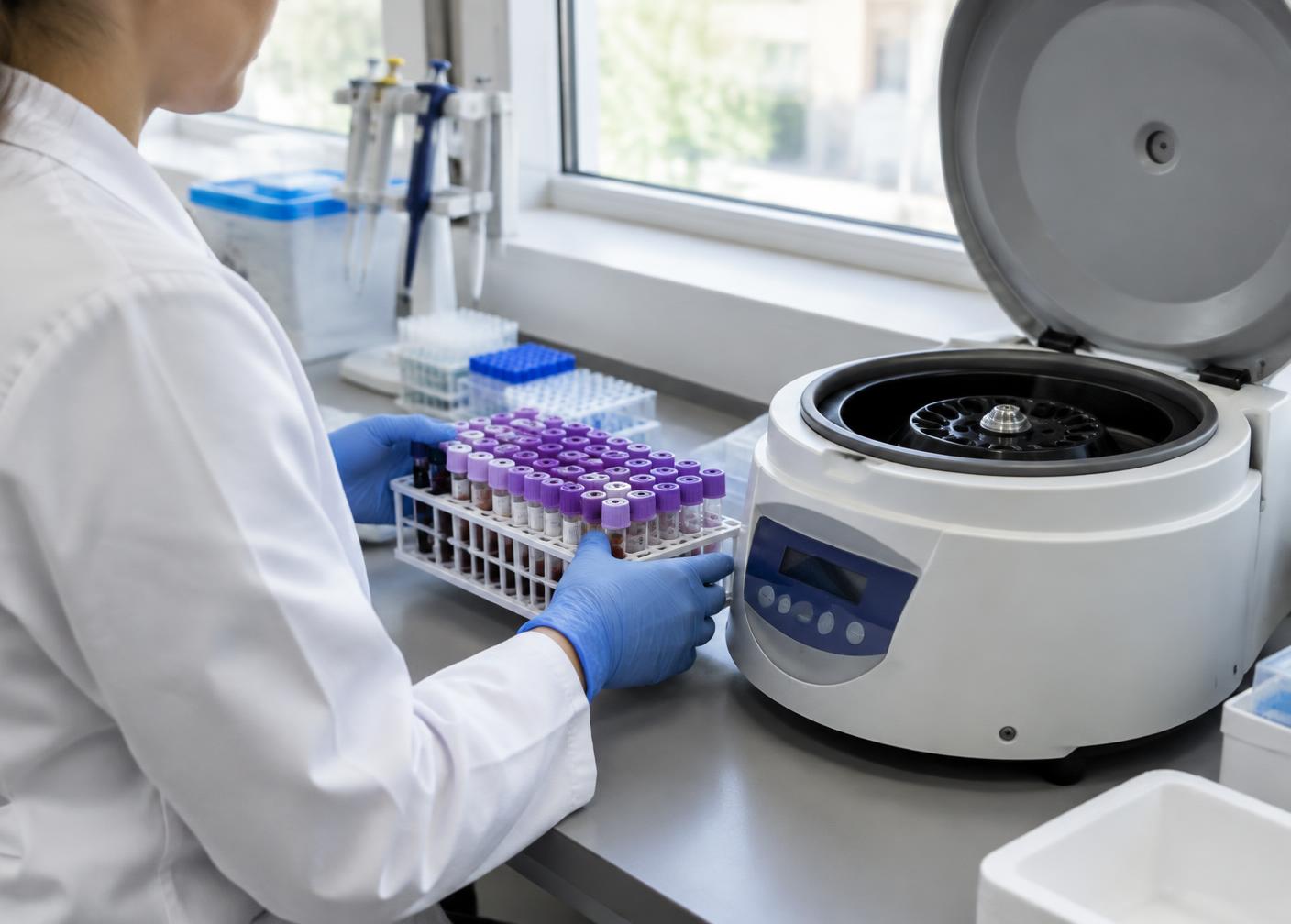
Laboratory technician organizing specimen tubes beside a centrifuge

01 / Diagnostic laboratories · Requirements-led coordination

Hospitals and health systems

Connecting Facilities, Teams, and Critical Movements.

Health systems need coordination across facilities, receiving laboratories, and operational teams. Service arrangements should reflect the realities of each location, not a one-size-fits-all model.

Healthcare Logistics
Plan proposed interfacility and hospital-to-laboratory movements around courier coordination and multiple receiving locations.
Specialized Workforce
Define logistics and operations support roles around facility-specific needs and verified qualifications.
Operations Technology — Planned Capabilities
Planned cross-site handoff records, exception documentation, and operational reporting.
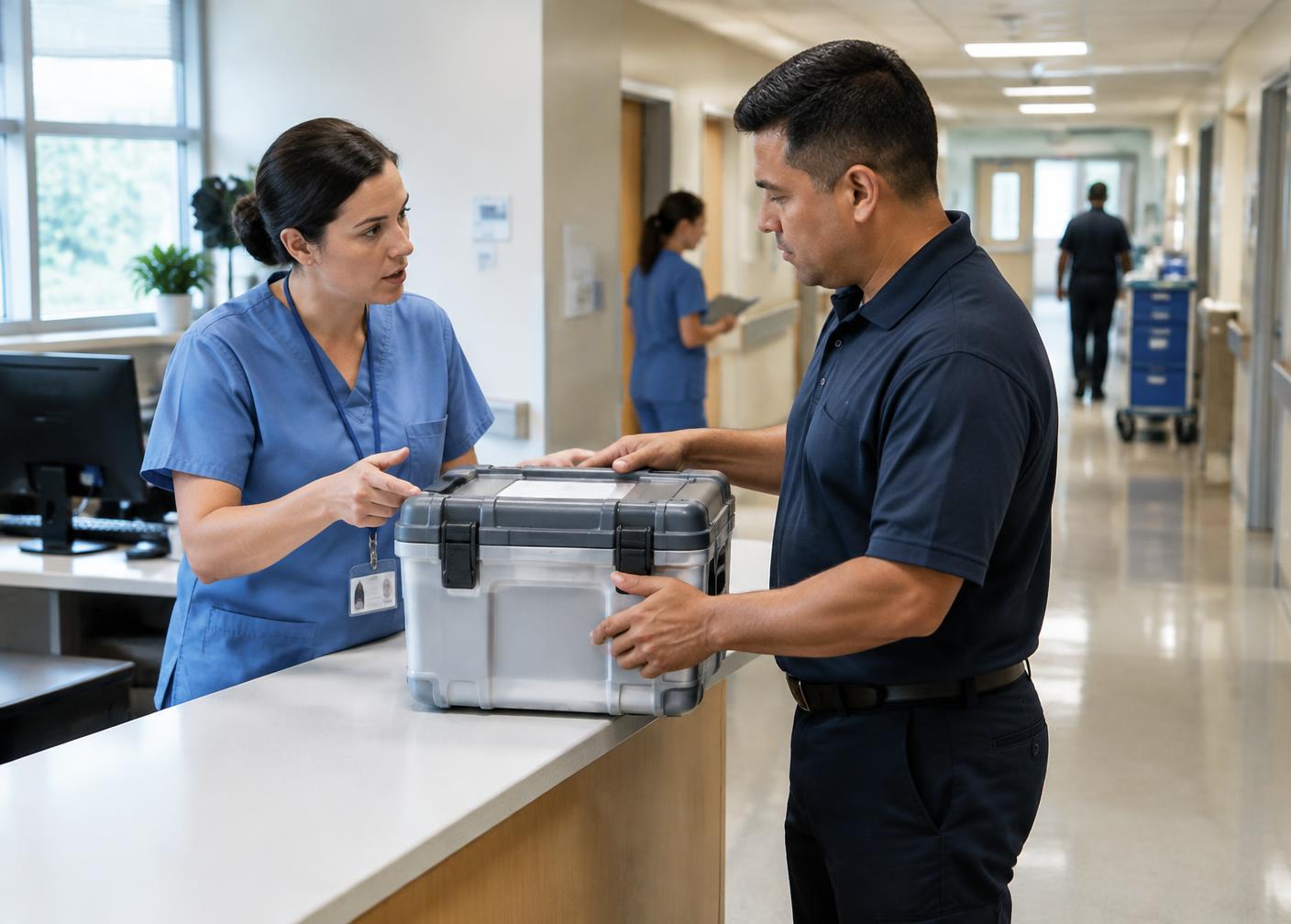
Hospital staff member coordinating a transport-container handoff with a courier

02 / Hospitals and health systems · Requirements-led coordination

Clinical research organizations

Supporting the Operational Demands of Clinical Research.

Research operations bring study-specific schedules, site relationships, and handling requirements. A potential engagement begins with understanding the protocol and the operational conditions it demands.

Healthcare Logistics
Assess research specimen transportation, study-specific schedules, and protocol-defined handling requirements.
Specialized Workforce
Evaluate research collection and operations personnel against study-specific qualifications and readiness.
Operations Technology — Planned Capabilities
Planned documented handoffs, site coordination records, and appropriate escalation reporting.

Specialized research shipments are evaluated according to applicable study protocols, required qualifications, packaging, and operational readiness.

Research laboratory professionals reviewing requirements beside specimen transport packaging

03 / Clinical research organizations · Requirements-led coordination

Across the Healthcare Ecosystem

Distinct Needs. A Coordinated Approach.

Each organization brings its own collection patterns, personnel requirements, and operating priorities. Potential services are evaluated against those needs and verified capabilities.

Healthcare Providers

Physician practices

Predictable specimen collection times coordinated with the practice day.

Logistics
Plan pickups around clinic workflows, collection times, and reference-laboratory cutoffs.
Workforce
Evaluate collection-site preparation and personnel needs without disrupting appointment schedules.
Technology — planned
Planned pickup requests and collection-site acknowledgments tied to receiving windows.

Healthcare Providers

Specialty clinics

Specialty collection requirements aligned with designated receiving laboratories.

Logistics
Review specimen-specific packaging, handling, and transport requirements with the receiving laboratory.
Workforce
Evaluate qualified collection personnel against the clinic's specialty and role requirements.
Technology — planned
Planned handling instructions and handoff records for specialty collection workflows.

Healthcare Providers

Urgent care centers

Variable daily specimen volumes and time-sensitive collections.

Logistics
Evaluate flexible pickup windows against daily volume and receiving laboratory schedules.
Workforce
Review collection support and operational coverage for changing daily demand.
Technology — planned
Planned pickup queues and exception records for changes in collection timing.

Life Sciences & Research

Biotechnology companies

Project-defined research movements with documented custody.

Logistics
Review research material handling and transport requirements for each proposed project.
Workforce
Assess appropriately qualified laboratory and project support personnel.
Technology — planned
Planned custody records and project-specific movement documentation.

Diagnostics & Laboratories

Independent laboratory networks

Recurring routes planned across multiple collection locations.

Logistics
Coordinate proposed multi-location pickups around receiving cutoffs and route schedules.
Workforce
Review collection, courier, and receiving support needs across the proposed network.
Technology — planned
Planned consistent delivery records and cross-location pickup documentation.

Healthcare Supply Chain

Healthcare supply chain operations

Inter-facility movements and scheduled replenishment.

Logistics
Evaluate transport schedules, designated receiving locations, and facility handoff requirements.
Workforce
Review dispatch and receiving coordination roles for planned material movements.
Technology — planned
Planned replenishment requests, receipt records, and inter-facility status reporting.

Industry Engagement

Solutions Shaped Around Your Operation.

  1. 01

    Understand Your Requirements

    Discuss facilities, locations, shipment types, schedules, personnel requirements, and operational needs.

  2. 02

    Define an Appropriate Service Model

    Evaluate logistics, workforce, and documentation needs against available operational capacity, qualifications, and applicable handling requirements.

  3. 03

    Establish Clear Operating Expectations

    Determine service arrangements, responsibilities, qualification requirements, communication, and reporting before implementation.

Inquiries are welcome from organizations across the United States. Service availability, regulated shipment requirements, qualifications, and operational readiness are confirmed before an engagement. Operations technology capabilities are in development.

Let's Build a More Connected Healthcare Operation.

Tell us about your organization's logistics, workforce, or operational coordination needs. We'll discuss an approach aligned with your requirements.

Explore Our Solutions

Request Solutions

Discuss Your Operational Needs.

Share your organization, operational locations, and requirements. Submissions are currently paused pending an approved, published Privacy Policy.

Precision in Every Delivery.

Do not include patient names, medical records, or other sensitive clinical information. Submitting an inquiry does not confirm service availability.

Industry submissions are paused until an approved, published Privacy Policy and collection disclosures are in place. Your entries are not submitted or saved.

Privacy Policy — pending

A company-approved Privacy Policy has not yet been provided. An approved policy must be published and collection disclosures reviewed before submissions reopen. When enabled, the form stores contact details and operational requirements in restricted inquiry storage. Please avoid sensitive clinical information.

By submitting this form, you acknowledge that VialRelay will process your information as described in our Privacy Policy (awaiting company approval). This is not consent to marketing communications.